Grand Prix du livre de Montréal: 2026 edition

Discover the 10 must-read works that made up the jury selection for this year’s Grand Prix du livre de Montréal. See if you can predict which will named among the 5 finalists and which will take top honours.
Find inspiration in the readings that captured the jury members’ hearts and minds. These works are available at your local library or in digital format. Reserve your copy today.
Jury selection
Here are the 10 titles selected:
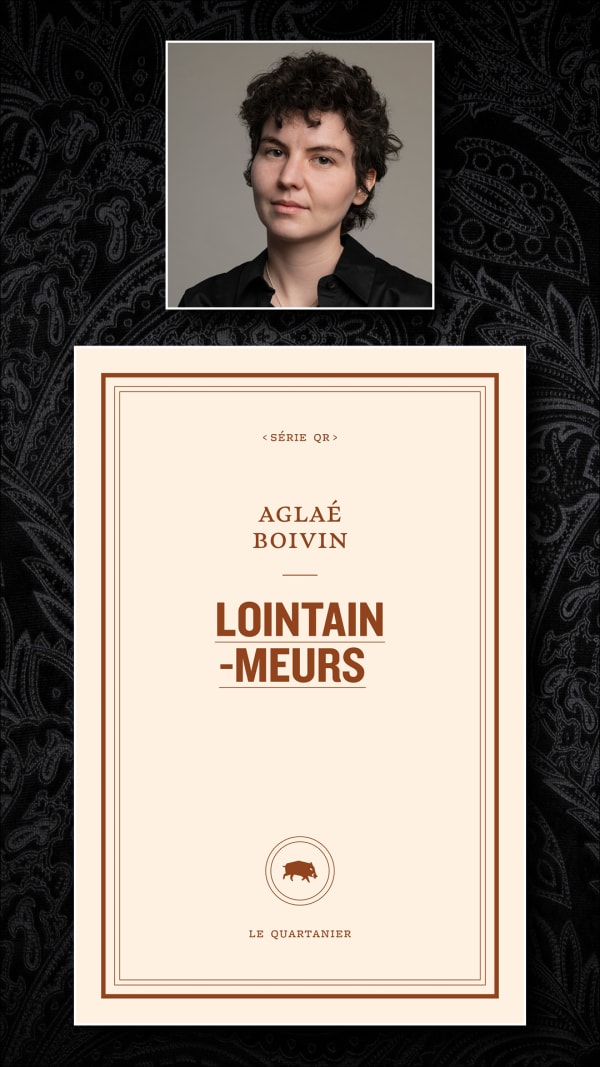
Lointain-Meurs, by Aglaé Boivin, Le Quartanier
Jury’s comment
“A daring and unclassifiable debut novel! Aglaé Boivin (in French) explores the themes of death, absence, and the ambiguous powers of language. Through an inventive structure, where fragments, lists, and fictitious condolence letters intertwine, a narrator reflects on the disappearance of her dogs, her relationships with others, and the irreversibility of loss. Violence, creativity and the strangeness of childhood nurture a philosophical reflection laced with humour and surprises. Blurring the lines between prose and poetry, Lointain-Meurs speaks with an original voice, whose formal inventiveness transforms even the darkest subjects into a surprisingly vivid literary experience.”
Reserve (in French)
Photo credit: Le Quartanier - Justine Latour
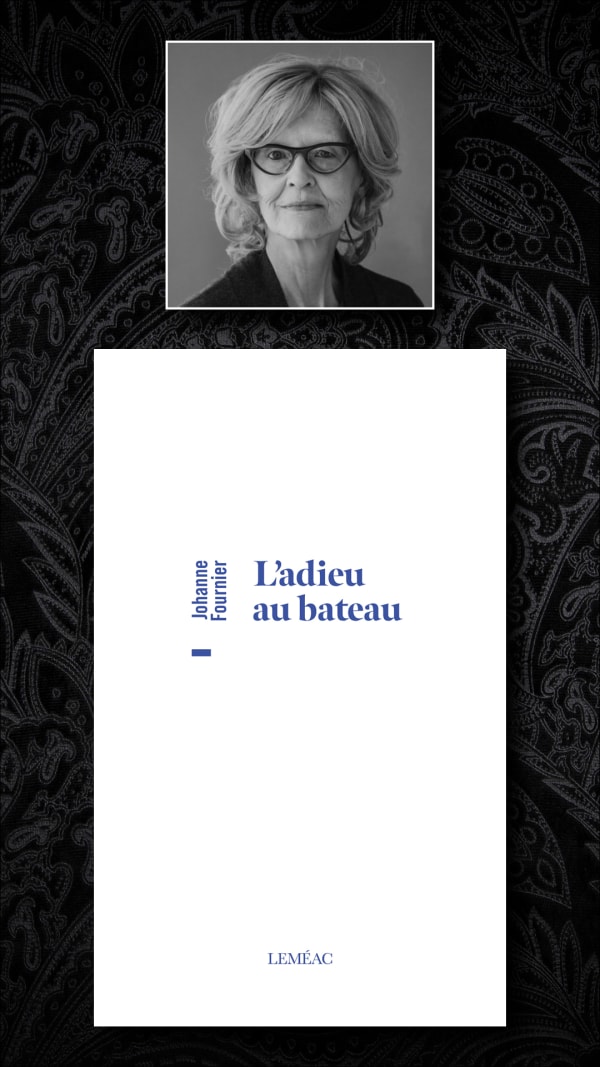
L’adieu au bateau, by Johanne Fournier, Leméac
Jury’s comment
“How does one continue to inhabit the world after the loss of a loved one? In L’adieu au bateau, Johanne Fournier (in French) depicts the slow process of mourning through the places, landscapes, and objects of a life now marked by absence. Set against the backdrop of streams, forests, and rivers, her narrative evokes with deeply moving precision the ordinary gestures to which loss confers new meaning. A simple, delicate writing style, and a refusal to wallow in self-pity imparts unexpected depth to this remarkably brief book. A luminous tribute to love, until the throes of loss.”
Reserve (in French)
Photo credit: Marie-Eve Campbell
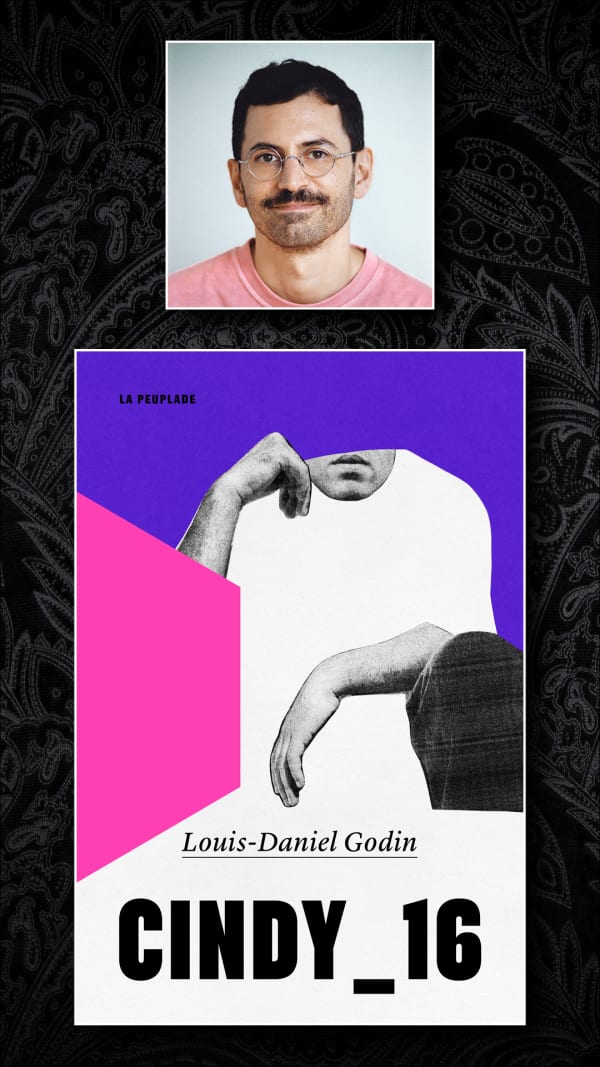
Cindy_16, by Louis-Daniel Godin, La Peuplade
Jury’s comment
“Through Cindy_16, Louis-Daniel Godin (in French) revisits the memories of a relationship marked by sexual exploitation, exploring shame, consent, and the difficulty of acknowledging one’s own trauma. An obsessive writing style, marked by repetitions, shifts in perspective, and variations in pronoun usage, mirrors the hesitations of a memory striving to understand without ever being able to definitively pin down the roles. By delving into doubt, guilt, and psychological defense mechanisms, the novel gives the complexity of trauma a striking form. A vulnerable and lucid work that contributes to a necessary collective reflection on power dynamics.”
Reserve (in French)
Photo credit: Godefroy Mosry
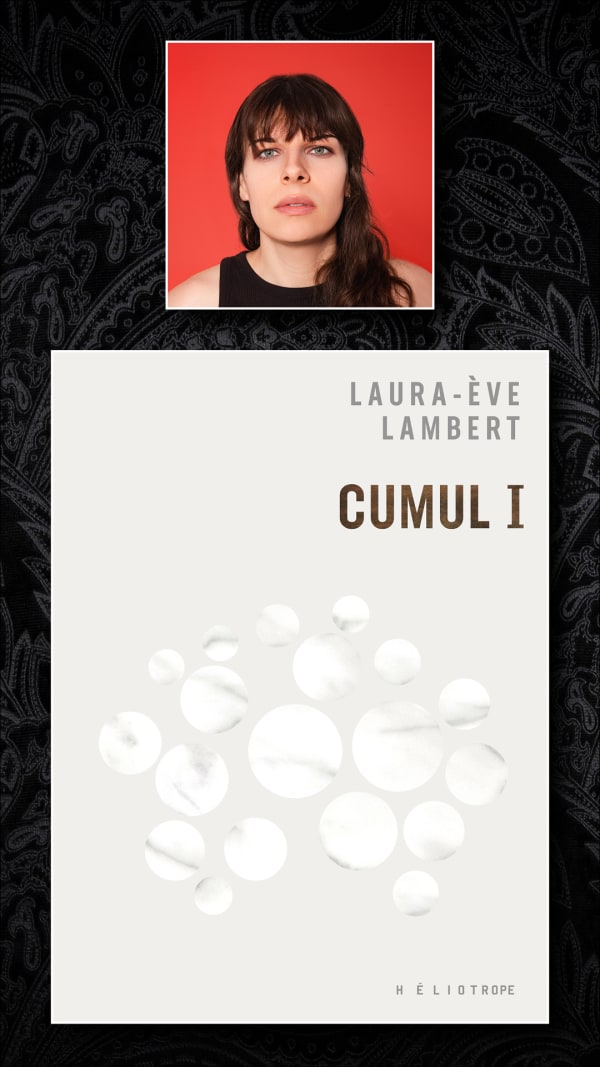
Cumul I, by Laura-Ève Lambert, Héliotrope
Jury’s comment
“Cumul I by Laura-Ève Lambert (in French) plunges readers into the tormented consciousness of an art historian confronted with her contradictions, her guilt, and her imposter syndrome. An encounter with a sculpture by Louise Bourgeois becomes the starting point for a dizzying exploration of desire, the body, teaching, and individual responsibilities. In meticulously crafted prose, where every twist of thought heightens the tension, reality seems to warp in step with the narrator’s anxieties. This brief, intense novel captures with rare acuity the ambiguities of a character both vulnerable and disturbing.”
Reserve (in French)
Photo credit: Julia Marois
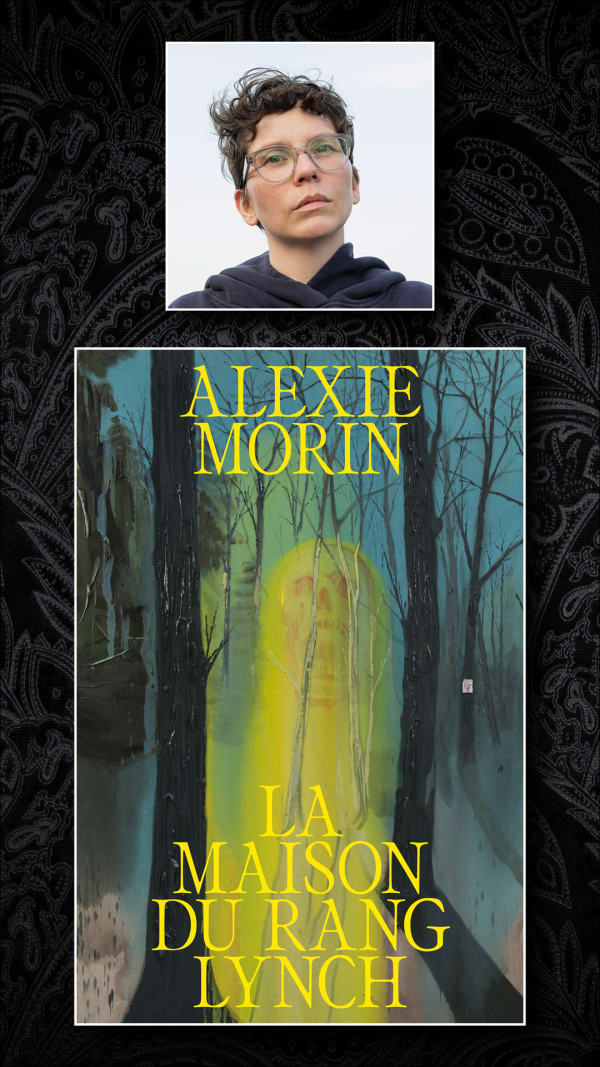
La maison du rang Lynch, by Alexie Morin, Le Quartanier
Jury’s comment
“In La maison du rang Lynch, Alexie Morin (in French) recounts a family saga of remarkable ambition, featuring complex characters, secrets, and uncertain memories. In a fictitious community deeply rooted in Québec, nature imposes its unsettling presence while the fantastical surfaces without ever disrupting the narrative’s balance. Sensory precision, well-crafted dialogue, and a mastery of deceptively simple prose bring to life a unique world, straddling the line between realism and the Gothic novel. This first instalment offers a glimpse into the full richness of a trilogy.”
Reserve (in French)
Photo credit: Le Quartanier - Justine Latour
Opioids and Organs, by Arizona O’Neill, Drawn & Quarterly

Jury’s comment
“At the crossroads of autobiographical narrative, documentary investigation, and fantasy, Opioids and Organs addresses the death of the author’s father, the opioid crisis, and the issues surrounding organ donation. Arizona O’Neill transforms an intimate experience, marked by grief and guilt, into a reflection on the value placed on human lives. By weaving literary references, fantastical creatures, and at times playful imagery into her narrative, she finds an original way to express her anger and her questions. A moving graphic novel in which visual inventiveness lends social significance to personal pain.”
Photo credit: Julie Artacho
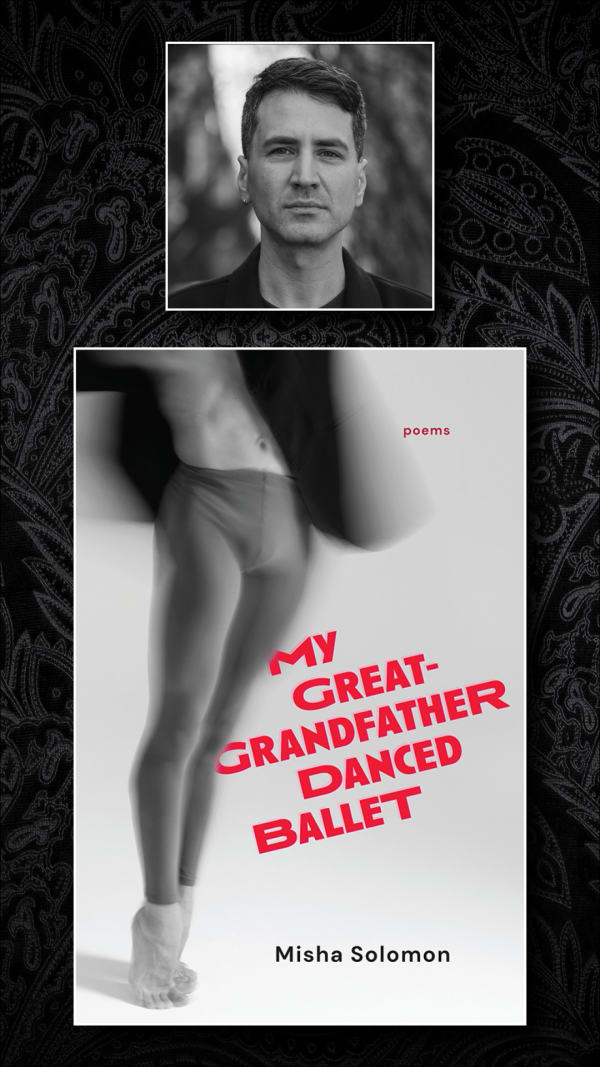
My Great-Grandfather Danced Ballet, by Misha Solomon, Brick Books
Jury’s comment
“My Great-Grandfather Danced Ballet, by Misha Solomon, explores family, cultural, and religious legacies through the lens of queer identity. His debut collection imagines possible lineages while acknowledging the silences and uncertainties surrounding family memory. Moving freely from one poetic form to another, it embraces humour, exuberance, and camp aesthetics, without shying away from questions of belonging and transmission. Rooted in particular in Montréal’s Jewish and gay cultures, this inventive poetry interrogates ways of loving, of telling one’s story, and of finding one’s place in a collective history.”
Photo credit: Jean-Pierre Denault
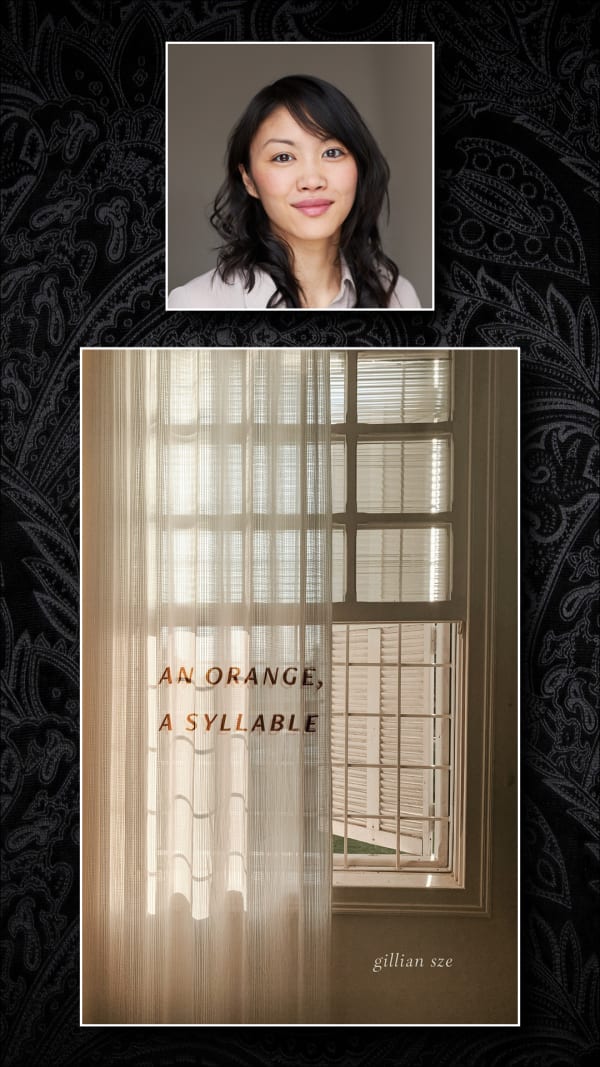
An Orange, A Syllable, by Gillian Sze, ECW Press
Jury’s comment
“In An Orange, A Syllable, Gillian Sze presents meditative poetry in which words, motherhood, love, and artistic creation resonate with one another. As the child’s language develops, the collection enriches its own way of understanding the world, its sensations, and its transformations. Amid languages, emotions, and images, each poem becomes both an exercise in translation and an invitation to see things differently. Beneath an apparent simplicity lies a subtle architecture, attuned to the tensions of family life and the mysteries of art alike. A work of great mastery, sensitive and deeply grounded.”
Photo credit: Nadia Zheng
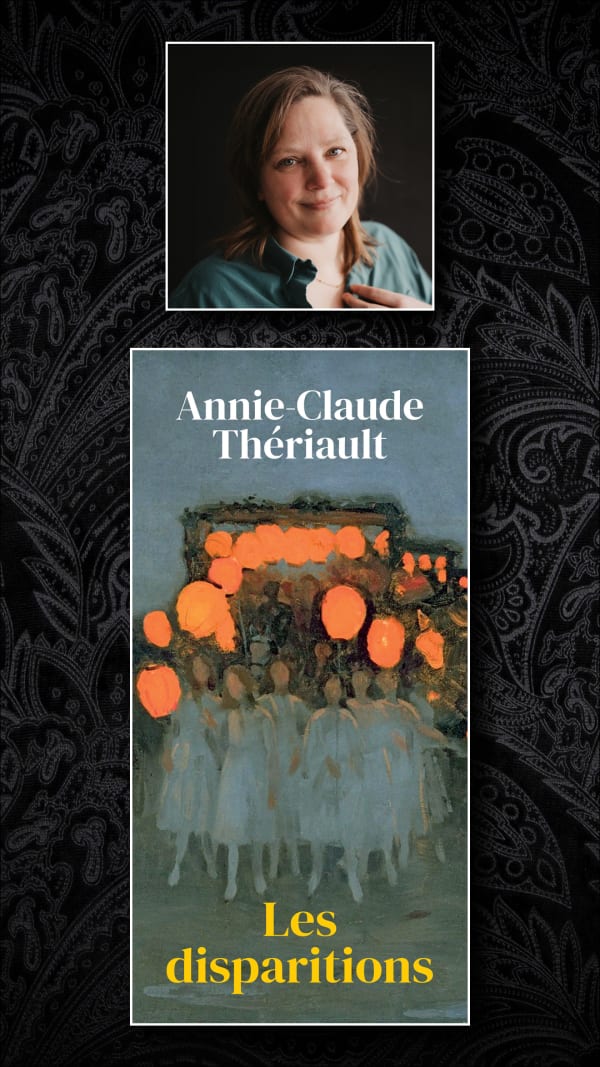
Les disparitions, by Annie-Claude Thériault, Marchand de feuilles
Jury’s comment
“In Les disparitions, Annie-Claude Thériault (in French) brings together seven short stories in which insularity, loss, and departure shape the contours of fragile lives. The geographical boundaries of the islands are mirrored by the more secret boundaries drawn by human relationships, memories, and social upheavals. Village closures, abandoned places, and personal disillusionments create a world inhabited by believable and deeply human characters. Each short story has its own distinct voice and atmosphere, while contributing to a remarkable overall unity. Through her keen insight and sensitive prose, the author reveals what remains when something disappears.”
Reserve (in French)
Photo credit: Isabelle Lafontaine
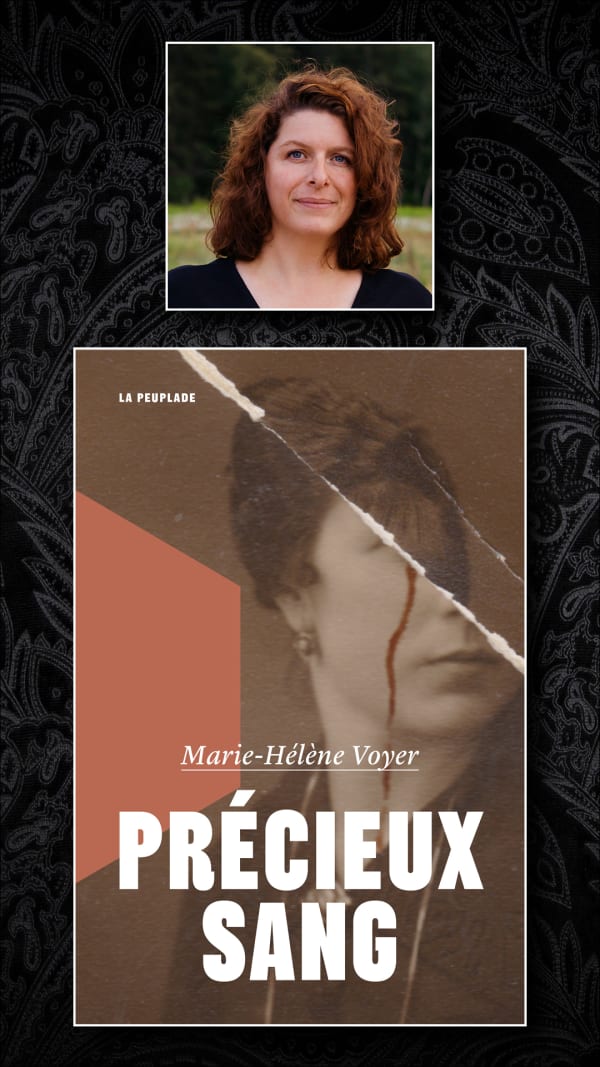
Précieux sang, de Marie-Hélène Voyer, La Peuplade
Jury’s comment
“With Précieux sang, Marie-Hélène Voyer (in French) revives the voice of anonymous female workers whose bodies and lives were marked by industrial exploitation. Drawing on archival sources, she breathes new life into the actions, words, and sufferings of women employed primarily in factories, slaughterhouses, and mines. Her narrative poetry—at once theatrical and close to everyday speech—transforms this historical material into vibrant portraits. Building on her body of work dedicated to women’s lives, she blends social commitment, collective memory, and personal emotion, casting light on the long-hidden violence of the working world.”
Reserve (in French)
Photo credit: Atelier Camion
The 5 works shortlisted will be announced on November 10.
Jury
The jury for the Grand Prix du livre de Montréal is representative of the various sectors within the publishing industry and of Montréal’s contemporary literary and intellectual currents.
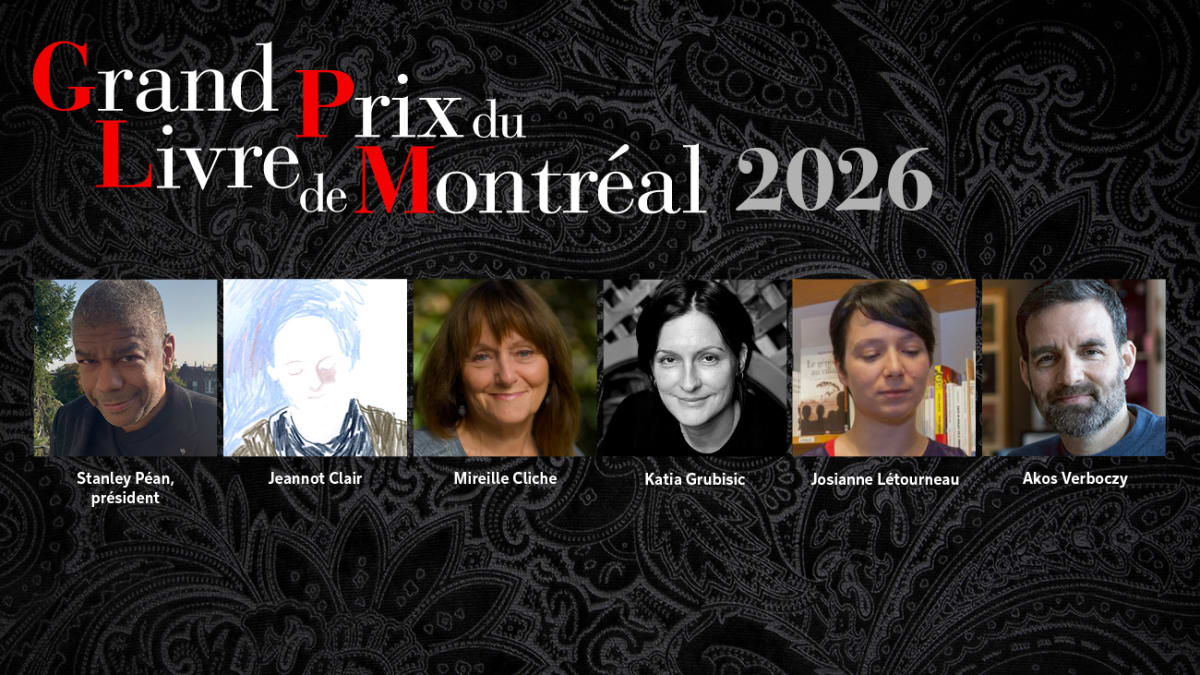
Writer, journalist and radio personality Stanley Péan was born in Port-au-Prince and raised in Jonquière (Saguenay). The author of some 30 books in various genres, including a recent collection of short stories entitled “La Pénombre propice”, he serves as chair of the board of directors of the Festival international de la littérature and sits on the boards of the Conseil des Arts de Montréal and the magazine ”Lettres québécoises”.
Photo credit: Portrait of the author by Sophie Lemaire
Jeannot Clair is a translator, literary consultant and critic. He translated ”Jungle” by Eugene Marten and ”La fractale Baudelaire” by Lisa Robertson, and he is the host of the podcast ”Hiatus”.
Photo credit: Juli Delporte
Mireille Cliche has long balanced a career as a cultural manager with her writing, on which she currently focuses. She has published six poetry collections, a novel, and a picture book featuring illustrations by Stéphane Jorisch. Her very first collection, “Jours de cratère,” earned her the 1991 Octave-Crémazie Prize.
Photo credit: Benoit Guérin
Katia Grubisic is a writer and translator. She has won the Gerald Lampert Memorial Award, the Cole Foundation Prize for Translation, and the Governor General’s Award, and has been shortlisted for the A.M. Klein Prize.
Photo credit: J. Parr
Lifelong reader and bookseller since 1997, Josiane Létourneau currently works at the Paulines bookstore on Rue Masson in Montréal.
Akos Verboczy is the author of the novel ”La maison de mon père”, published in Québec by Éditions du Boréal in 2023 and in France by Le bruit du monde in 2024. He also authored the novel ”Rhapsodie québécoise”, published by Éditions du Boréal in 2016.
Photo credit: Anna Tihanyi
Quick search
Need help?
Contact us if you have questions.