Inventories of heritage buildings
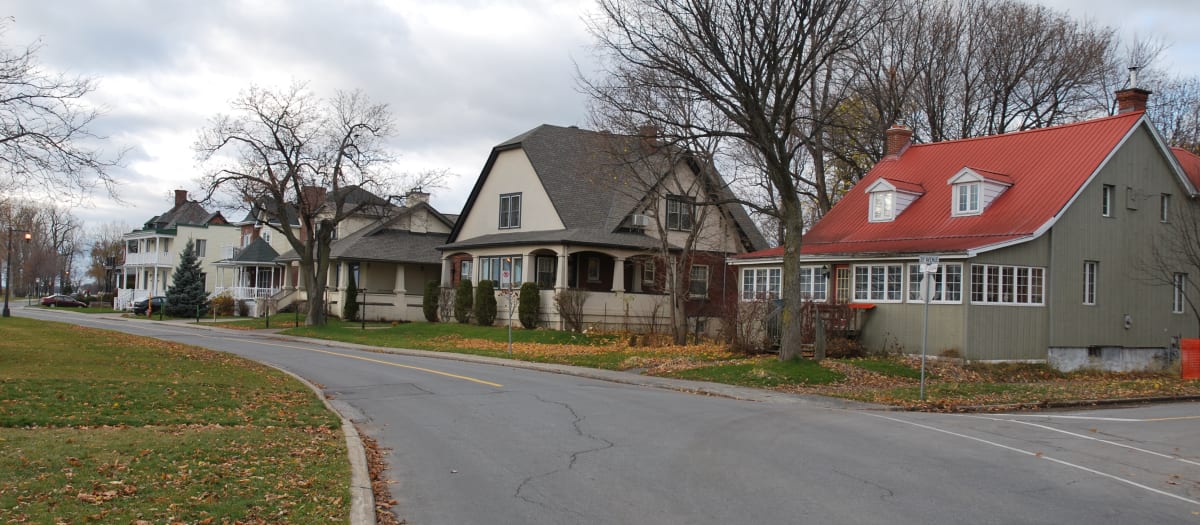
The census of pre-1940 heritage buildings located in the urban agglomeration of Montréal has been completed. City crews will be combing through neighbourhoods, taking pictures of the properties concerned, to update the information listed in the inventories.
The city is in charge of coordinating this operation across the urban agglomeration. Following the 2021 amendments to the Cultural Heritage Act, all of Québec’s regional county municipalities (MRC in French) must produce an inventory of buildings of heritage value that were built before 1940.
Overall, 34 inventories were produced and adopted by the urban agglomeration council. There is an inventory for each of the 19 boroughs, and 15 for related municipalities, compounding a total of 68,500 main or secondary buildings. These inventories were produced in accordance with the methodology (in French) established by the ministry of culture and communications of Québec (ministère de la Culture et des Communications du Québec - MCC).
Exterior photographs will be taken until the end of 2028. Owners and occupants are asked to allow city crews to access the grounds at will, to facilitate their work.
Objectives
These inventories will provide a better understanding of the history, exterior architectural characteristics and heritage value of the retained buildings.
Protection measures
To enhance the protection of the built heritage, the Act respecting land use planning and development was amended in 2021. It now specifies that buildings of heritage value listed in the inventories are subject to the by-laws regarding their maintenance and demolition. These by-laws are applicable by the borough where they are located. Amendments to the Act aim to prevent demolitions resulting from abandonment or neglect, as well as to enhance transparency as it related to city decisions and citizen participation in public consultations
Contact your borough or municipality to find out more about requirements under these by-laws.
Other inventory types
The Cultural Heritage Act also provides for the production of post-1940 building inventories. In this regard, a pilot project was rolled out in Saint-Laurent borough to produce an inventory of buildings built between 1940 and 1975.
These inventories are produced locally. The possibility of extending the process to other urban agglomeration territories is currently in review.
How to access the inventories
By territory
On the interactive map
The list of adopted inventories is available on the platform Ma carte interactive. Here is how to read the information on the map:
- Choose the “Agglomeration” view in the menu on the top, right
- Click on the theme “Adopted inventories of heritage buildings”
- Select the desired territory to access the inventory
Details regarding each building appear when you click on the colored polygon that is linked to it on the map. A left sidebar then appears with the corresponding data.
Polygon boundaries are approximations. Data is provided for information purposes and does not carry any legal relevance.
Complementary data
Complementary data may be downloaded in the form of files on the city’s open data Web page.
For bibliographical sources used in the production of heritage building inventories, go to the Zoteroplatform. Zotero is a free, open-source reference management software. From the main inventory Web page, select “Group Library”, beneath the title “Inventaires immeubles patrimoniaux - agglomération de Montréal” to access the full reference library.
Sending information, or corrections
If you notice an error in our data, or if you have historical information regarding one of the inventoried buildings, share it with us using this form.
For questions regarding regulatory requirements, or to find out if your building is listed in one of the inventories, contact your borough or municipality.
Partner

The inventory of historical buildings is carried out with the financial support of the Gouvernement du Québec and the agglomeration of Montréal.
Quick search
Need help?
Contact us if you have questions.