Temporary housing for people transitioning out of homelessness

These modular housing units with support resources aim to provide a safe, dignified place to live for people transitioning out of homelessness while they are awaiting permanent housing.
The modular housing units with support services in Côte-des-Neiges—Notre-Dame-de-Grâce are fully operational since September 2025. The site located in Ahuntsic-Cartierville will welcome its first residents in winter 2026. A third site in Outremont is planned for 2026.
Each site has a maximum capacity of 30 people at a time. This represents the potential to help approximately 100 people annually to access permanent housing for each of the sites.
Characteristics of the modular housing units
Each site includes:
- Furnished single and double rooms
- An accessible room for people with reduced mobility
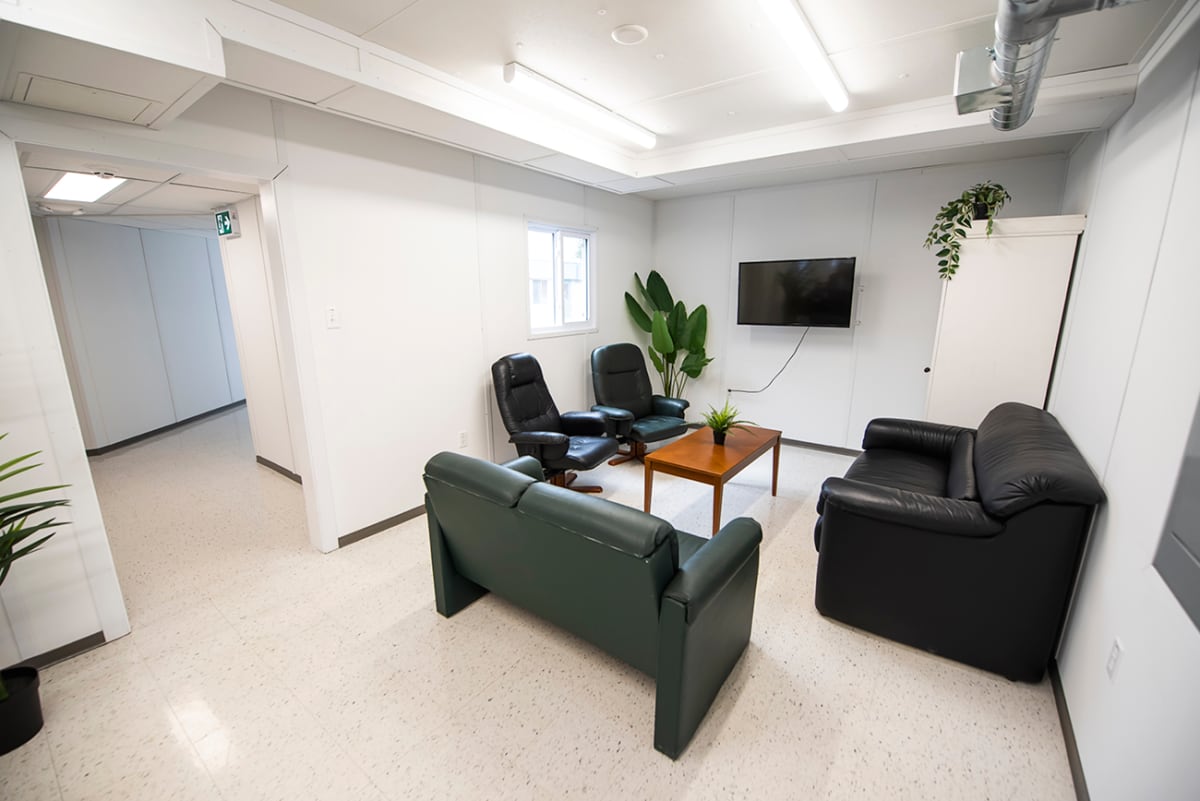
- Furnished common areas: kitchen, living room, dining room, laundry facilities and washrooms



Profile of occupants
Accompanied modular housing accommodate people who are ready to access transitional accommodation and are taking steps to find a permanent home.
A screening and assessment process is carried out by selected organizations to select the occupants, who are:
- Single or partnered adults
- People who are able to live in a community environment
- People who have no behavioural issues related to addictions or mental health.
24-hour support on site, 7 days a week
A community organization is responsible for supporting residents in order to facilitate their social and economic reintegration. Staff is present on site at all times. Their responsibilities includes:
- Providing psychosocial services and support in finding housing and employment
- Organize community activities
- Oversee the sharing of public space
Locations
These modular housing units complement existing temporary shelter and support resources for homeless persons.
The three sites meet several key criteria, including access to public services and proximity to public transit.
The modular housing units with support services in Côte-des-Neiges—Notre-Dame-de-Grâce are now operational. Residents have moved into the facilities and are beginning their journey toward social and economic reintegration, with the goal of finding permanent housing.
Partner organization
The organization Mission Old Brewery (in French) has been chosen to select and assess the 30 people who will occupy the site and support them in their search for a permanent home. The organization is on site and available 24/7 for the project’s residents. It is also tasked with maintaining the cleanliness of the premises and facilitating harmonious relations with the neighbourhood.
Work in progress notice
The modular units are installed on site. Interior work is underway.
Partner organization
The organization Rue Action Prévention Jeunesse (RAP Jeunesse, in French) has been chosen to select and assess the 30 people who will occupy the site and support them in their search for a permanent home. The organization will be on site and available 24/7 for the project’s residents. RAP Jeunesse will also be tasked with maintaining the cleanliness of the premises and facilitating harmonious relations with the neighbourhood as soon as the resource is opened.
Documents
To learn more about the project, the residents who are in the process of transitioning out of homelessness, and the 24/7 support services that will be offered to them, please refer to the project presentation (in French) and frequently asked questions (in French).
This project is being carried out in collaboration with the Québec government.
Quick search
Need help?
Contact us if you have questions.