Coyotes
Last updated March 19, 2019
Have you seen what you suspect is a coyote? What should you do? In general, coyotes do not pose a threat to human safety, provided that certain guidelines are observed. In particular, it’s important never to feed a coyote. Learn more about what to do if you should encounter a coyote.
Recognizing a coyote
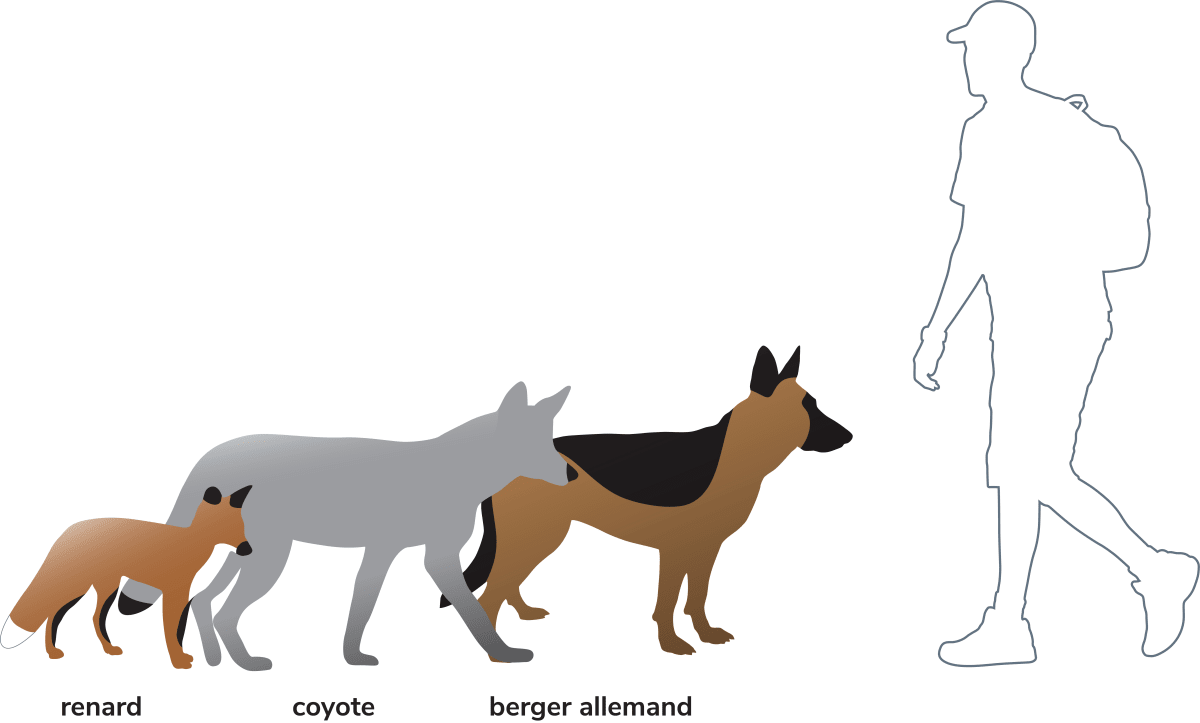
A coyote may be mistaken for a fox or certain canine breeds. Here is how to recognize a coyote.
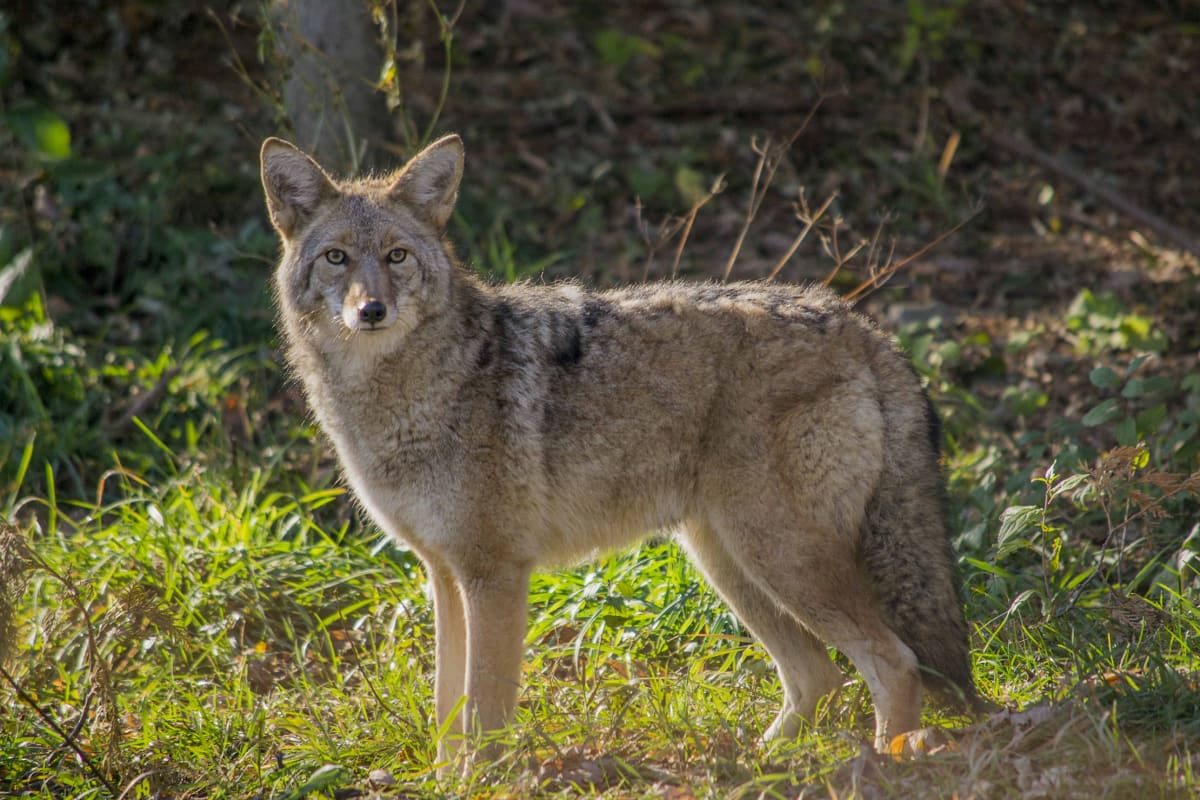
Physical features
- Size: The coyote is taller than a fox and is about the size of a German shepherd. Coyotes are taller than knee height, unlike foxes.
- Fur: Usually grey, while foxes are often red.
- Tip of the tail: Usually black for coyotes and white for foxes.
- Paws: A coyote’s paws are usually grey, like its fur. A fox’s front paws are black.
If you see what you suspect is a coyote, please report it to us.
Your sightings help us manage coyotes in urban environments.
Responsible actions for improved coexistence
At all times
- It is strictly forbidden to feed coyotes and other wild animals, except stray cats under the TNRM program.
- Never approach a wild animal, even if it is injured.
- Avoid feeding domestic animals outdoors.
- Keep your household garbage in animal-resistant bins.
- Keep your dog on a leash and only walk on marked trails.
- Keep your cat indoors, particularly at night.
- Pick up fruit that has fallen from trees, as it is a food source for coyotes.
- Block access to your property, balcony, shed and garden.
Any time you encounter a coyote
- Stay calm.
- Give the coyote the space it needs to move away.
- Never let your dog interact with a coyote.
- Keep your dog close or carry your dog in your arms.
- Move away, but never turn your back on the coyote.
- Always maintain visual contact with the coyote.
- Do not run.
If the coyote does not leave
- Make yourself bigger by raising your arms, making noise or yelling to scare the coyote.
- Throw objects in the coyote’s direction, without targeting the coyote directly so as not to make it more aggressive.
- Contact 911 in the event of an emergency.
For more about birds and other wild animals, visit the birds and other wild animals page.
Learn more about the topic
How-to
Need help?
Contact us if you have questions.